
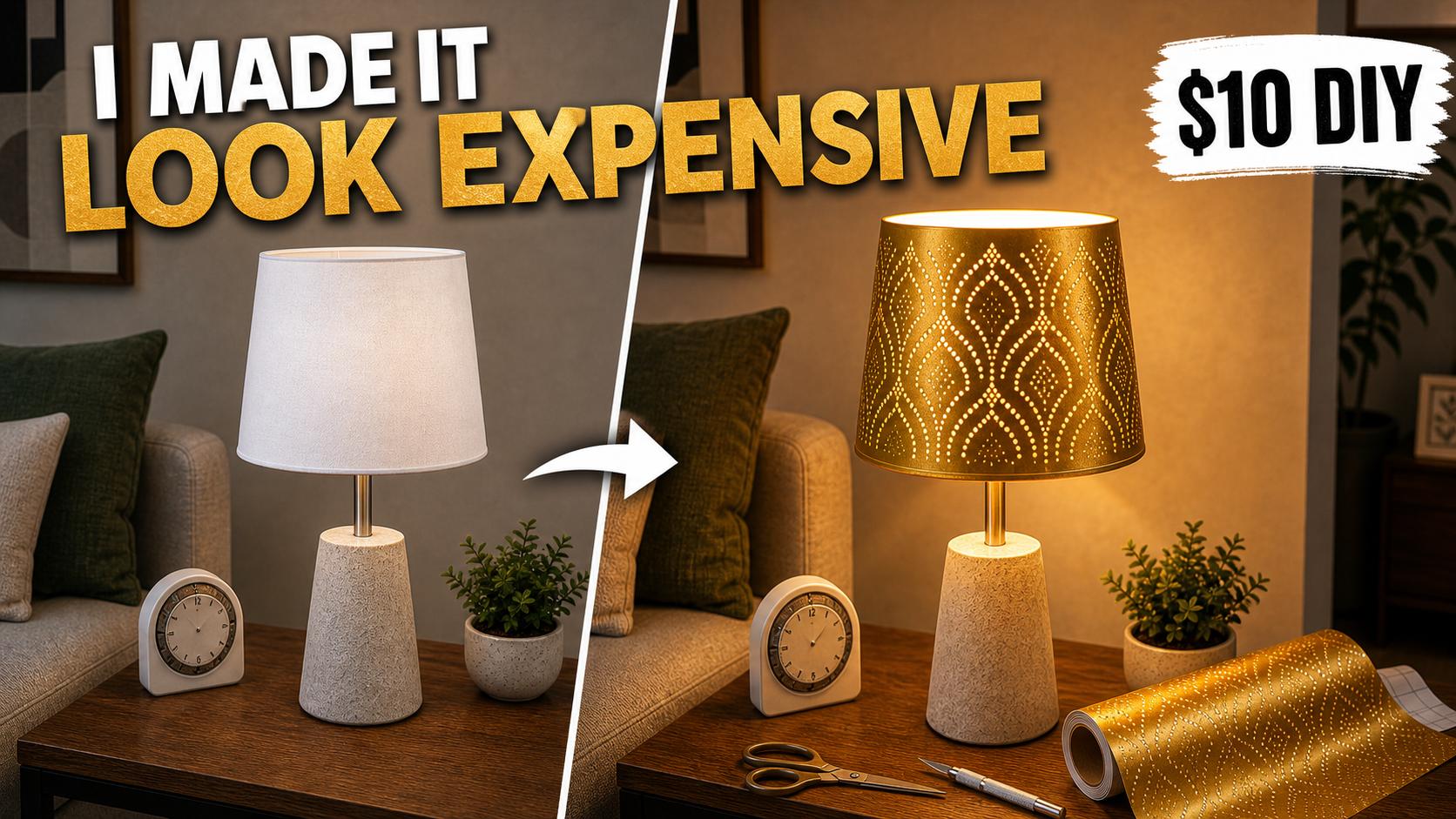
I Made a Plain Lampshade Look Expensive with Gold Peel-and-Stick Film
A plain white lampshade is useful, but it can make a room corner feel unfinished. This micro home hack turns that basic shade into a warmer, more intentional accent by applying gold peel-and-stick film to the outside of the lampshade.
The important detail is that this is not just a warm bulb trick. A warm LED bulb can make any lamp feel softer, but the design upgrade here is the visible gold surface on the outside of the shade.
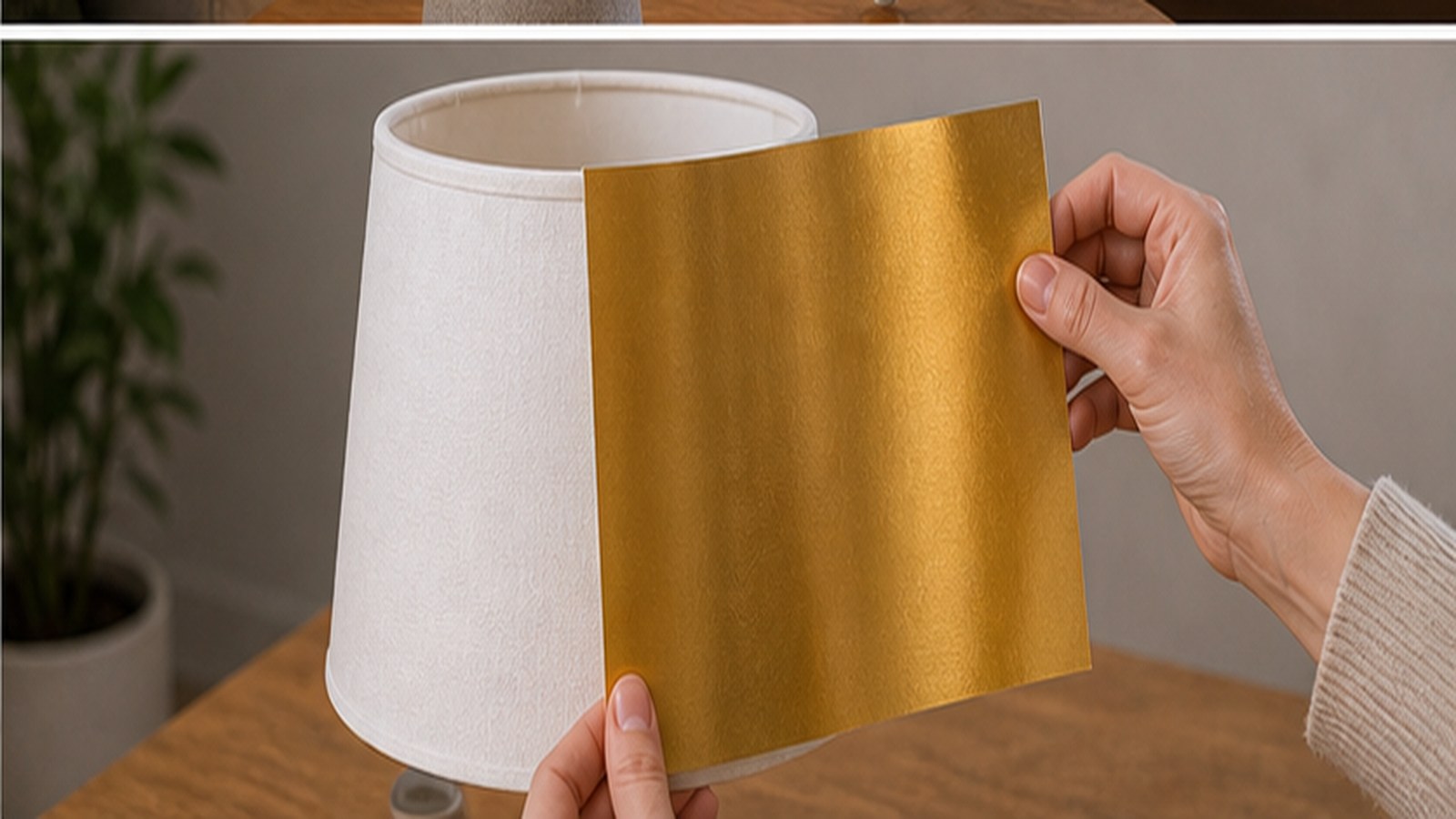
Even when the lamp is off, the shade should look more like a decorative object and less like a plain fabric cylinder.
What You Need
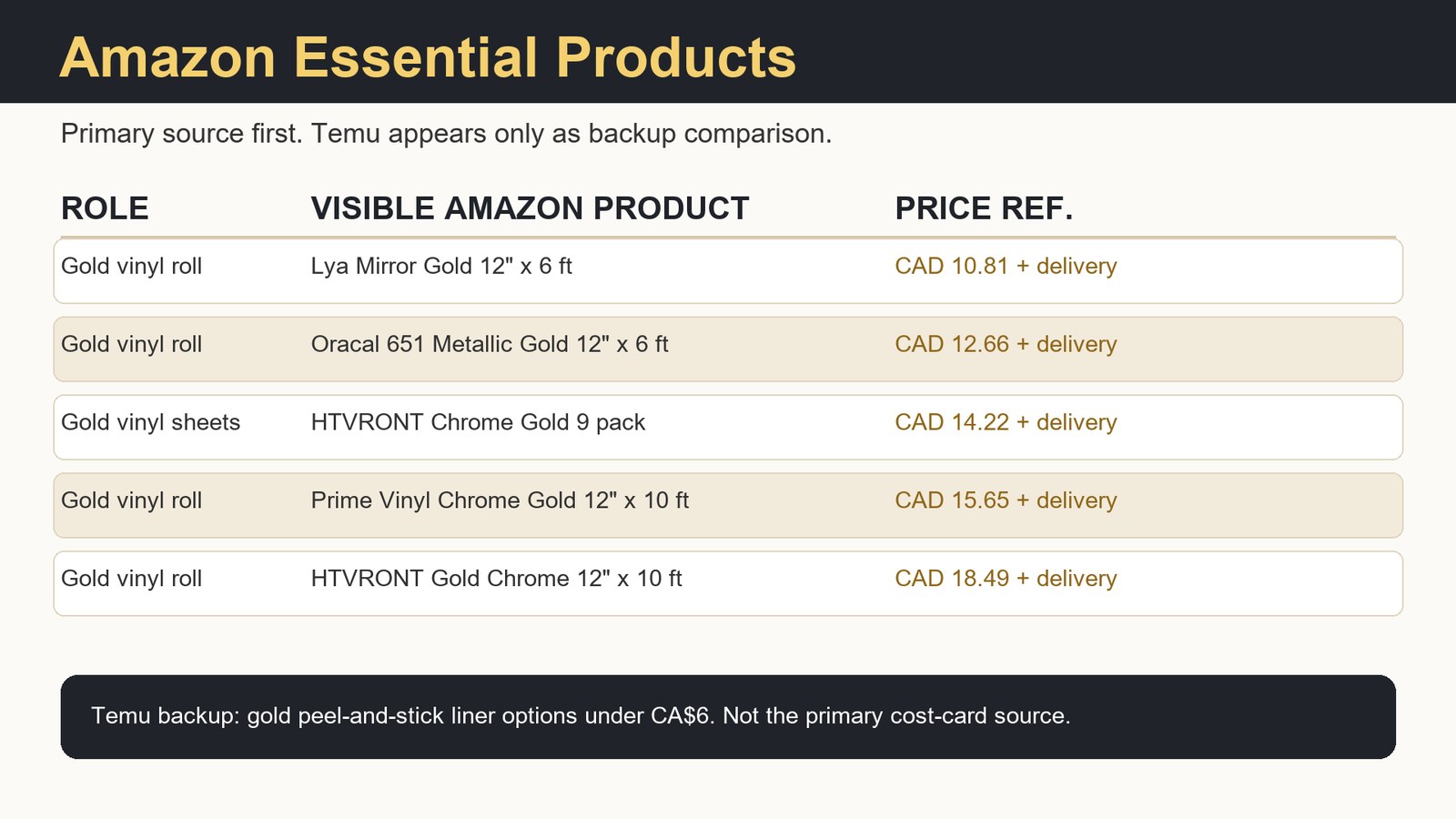
For this project, look for the current U.S. prices on Amazon.com first. Temu U.S. can be checked as a backup comparison, but the main product research should stay on United States marketplace pages with prices in USD.
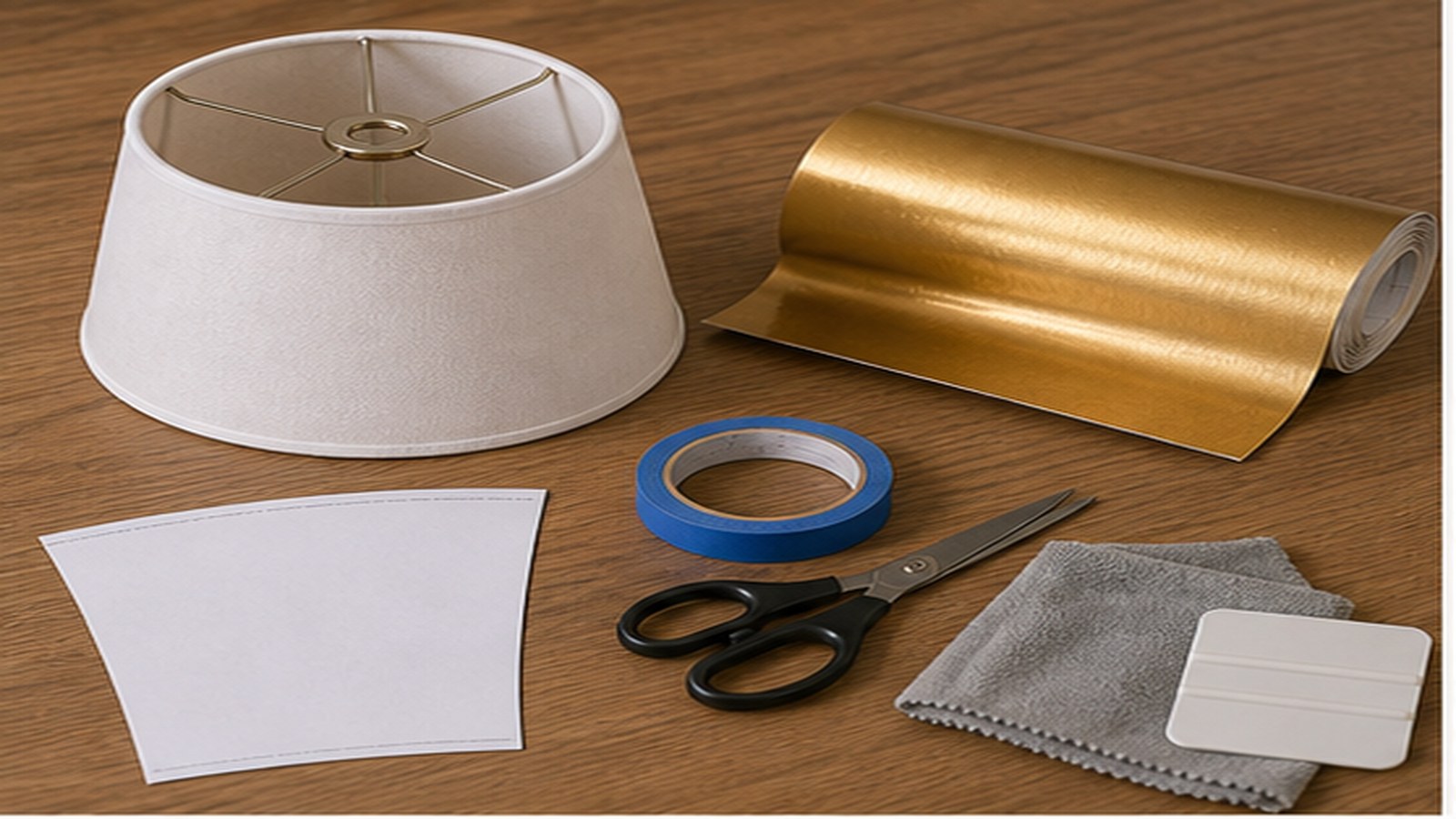
You need gold peel-and-stick vinyl, a smooth lampshade with enough bulb clearance, a low-watt warm LED bulb, paper for a curved template, painter tape, scissors or a craft knife, and a soft cloth or card for smoothing.
Avoid hot bulbs, tiny enclosed shades, fuzzy fabric shades, damaged shades, or lamps that already run warm.
Safety First
This hack only makes sense with a low-watt LED bulb. Do not use hot incandescent bulbs, high-watt bulbs, or a lamp that already makes the shade feel warm.
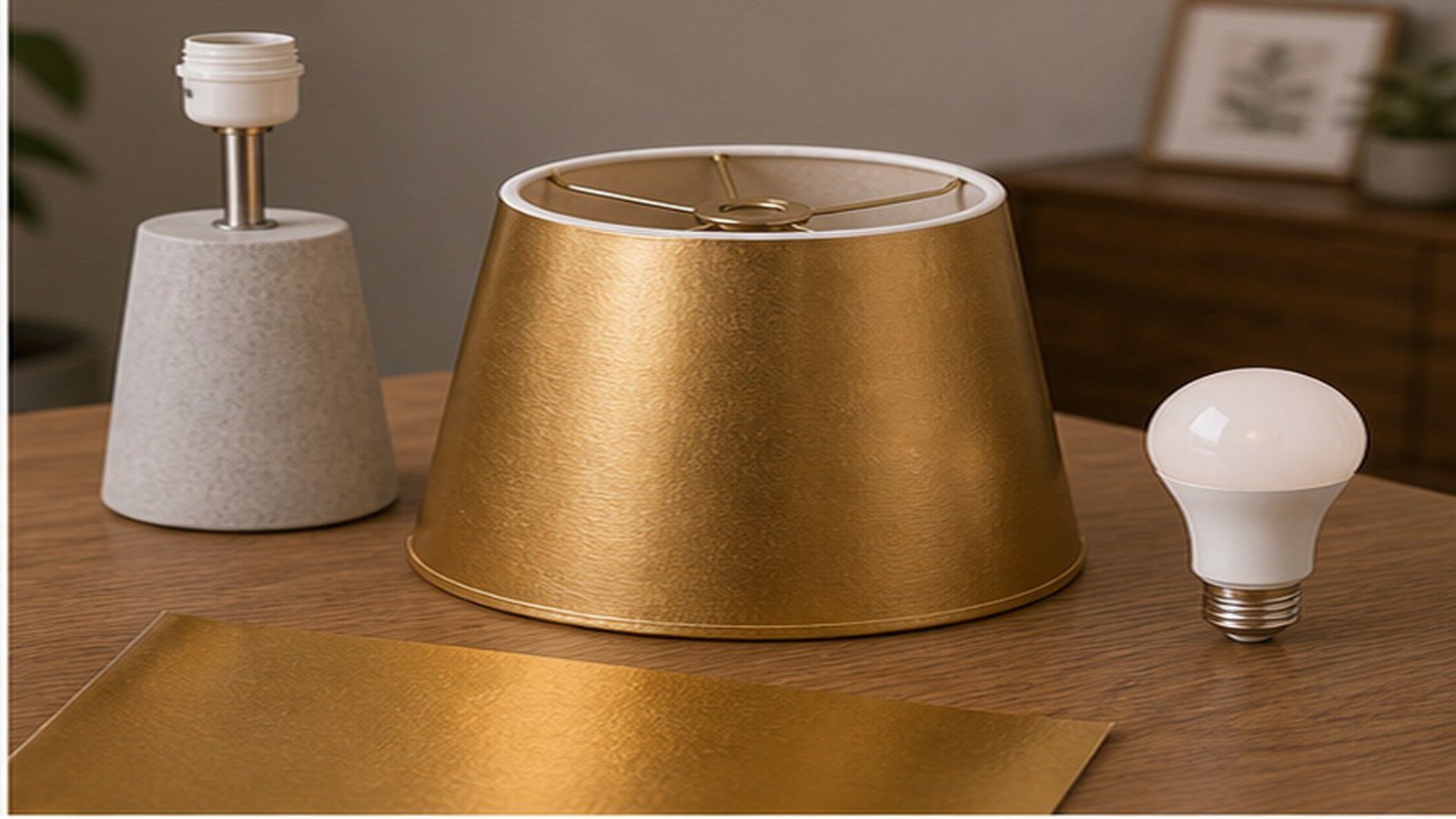
Before adding any film, remove the shade and check the lamp label. Follow the fixture wattage limit, and remember that LED wattage is the real electrical draw, not the big equivalent number printed on the bulb package.
Keep the adhesive film on the exterior surface only. Do not wrap thick material inside the shade near the bulb, socket, or metal frame.
Make a Curved Template
The easiest mistake is cutting a simple rectangle. Most table lampshades are tapered, which means the outside surface is part of a cone. A rectangle may wrinkle, tilt, or overlap badly.
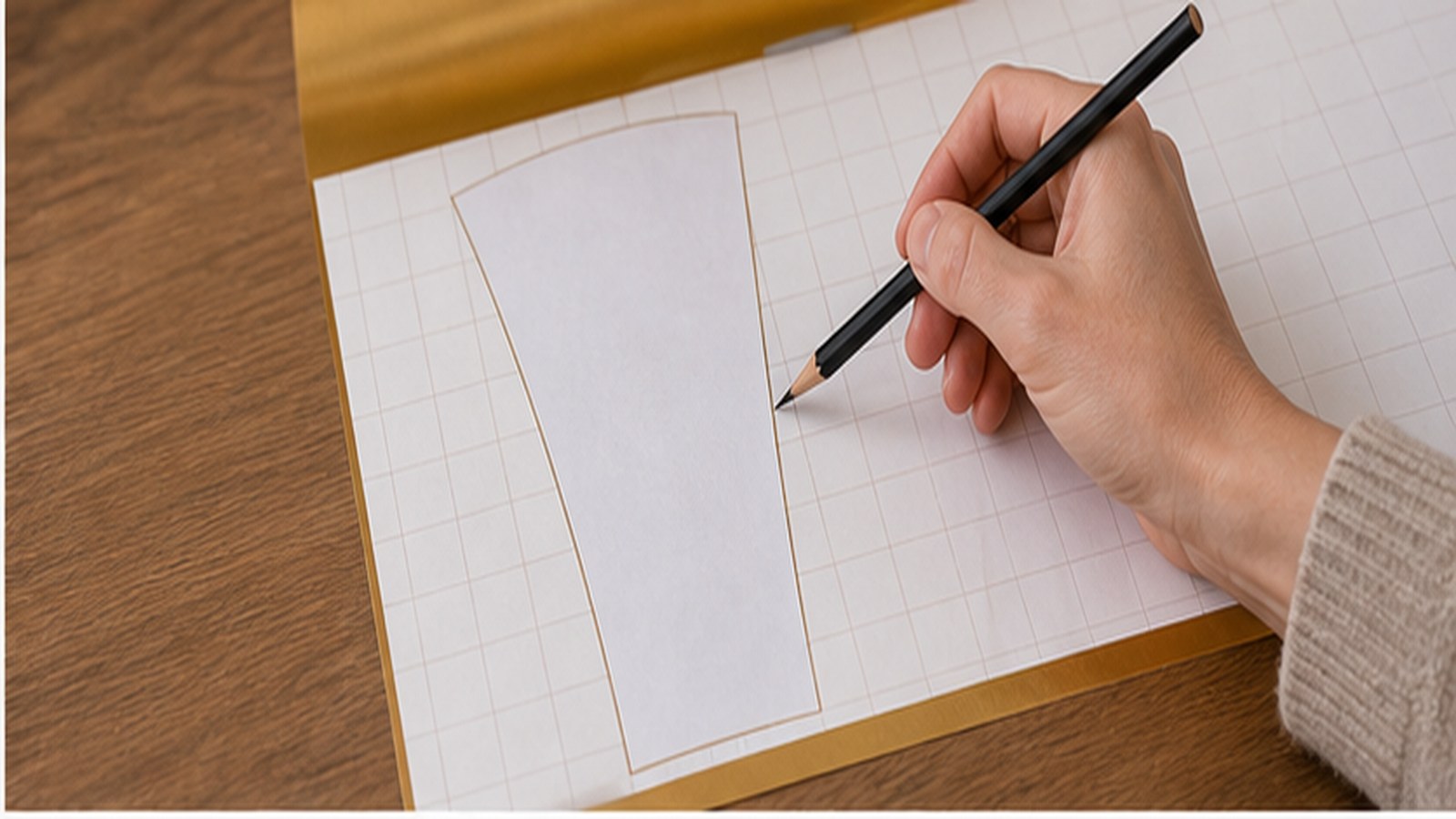
Hold paper against one section of the outside shade and use small pieces of painter tape to keep it in place. Mark the top edge, bottom edge, and side boundary, then remove the paper and trim it.
Test the paper template on the outside of the shade before touching the gold film. It should sit flat without forcing. If it buckles, adjust the curve first.
Make It Look Designed
You do not have to cover the whole shade in one plain sheet of gold. A full gold wrap can look elegant, but a patterned design can look even more custom.
- Vertical gold bands
- An Art Deco fan pattern
- Small negative-space windows
- A clean geometric border
- A partial gold wrap with the white shade still showing
The goal is to make the shade look intentional. A few well-placed shapes can look more expensive than a rushed full wrap.
Apply the Gold Film
Place the paper template on the backing side of the gold film and trace it. Cut slowly, leaving a tiny extra margin at first. You can trim more later, but you cannot add material back.
Before peeling the backing, dry-fit every gold panel on the outside of the shade. Check the top rim, bottom rim, and seam direction. Choose one back seam so the front view stays clean.
Once the dry fit looks right, peel only a small strip of backing from the first panel. Anchor the top edge near the back seam. Then smooth the panel downward and outward with a soft cloth over a card.
Do not stretch the film. Stretching makes the gold surface look cheap and can create wrinkles. Let the panel follow the shade curve naturally.
The Final Look
When the outside is wrapped or patterned, trim the top and bottom edges carefully. Put the shade back on the lamp and turn on the low-watt warm LED.
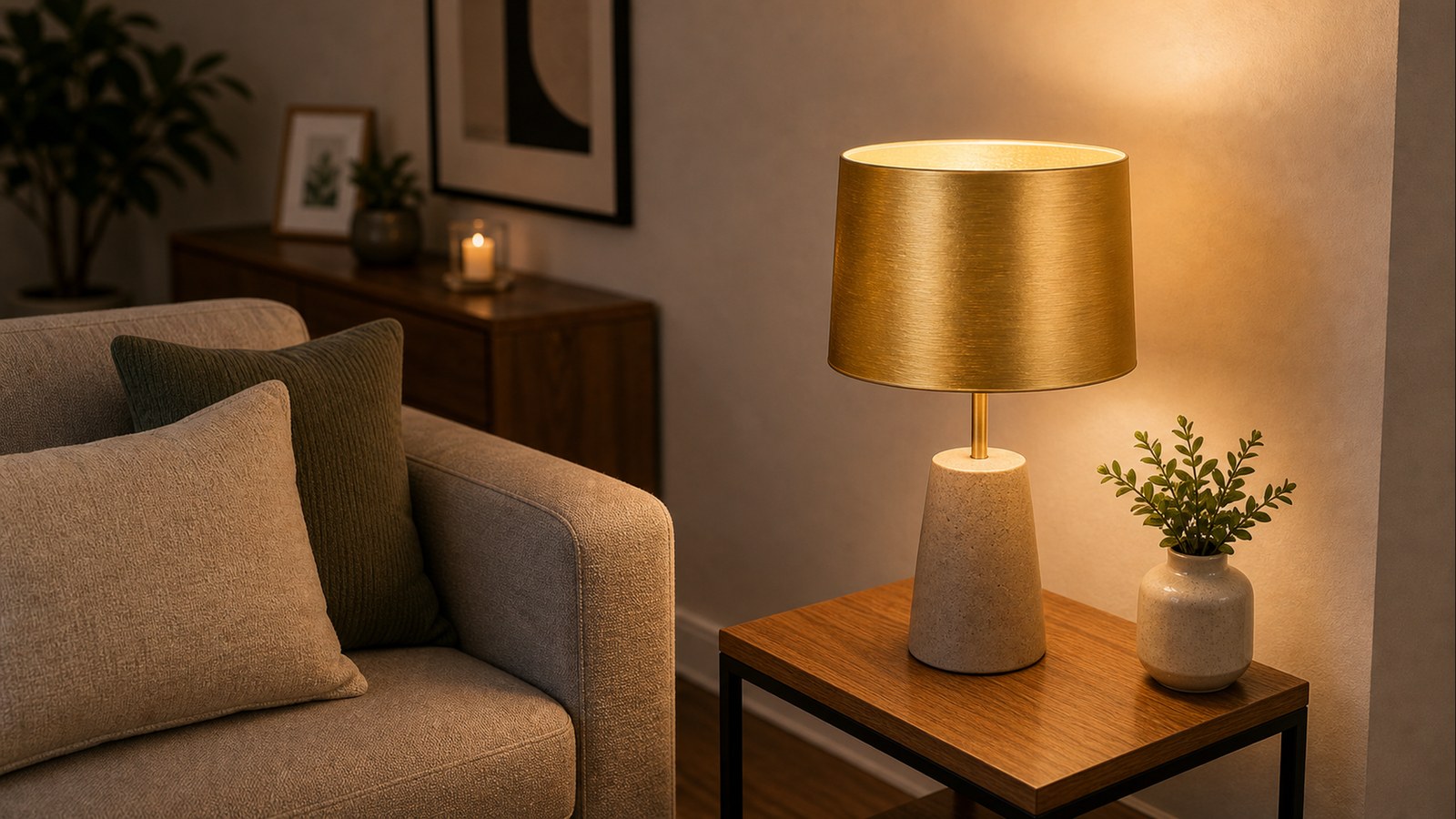
The gold outside catches room light, while the warm bulb makes the corner softer. The best version looks good both on and off: a plain lamp becomes a small gold accent lamp without buying a new lamp.
Quick Recap
- Use real peel-and-stick gold film
- Template the outside curve before cutting
- Keep the gold on the exterior surface
- Use a low-watt LED bulb only
- Keep adhesive away from heat
- Test the lamp for thirty minutes before trusting it
Done carefully, this is not random foil slapped on a shade. It is a real design upgrade that makes a basic lamp look much more intentional.
Leave a Reply